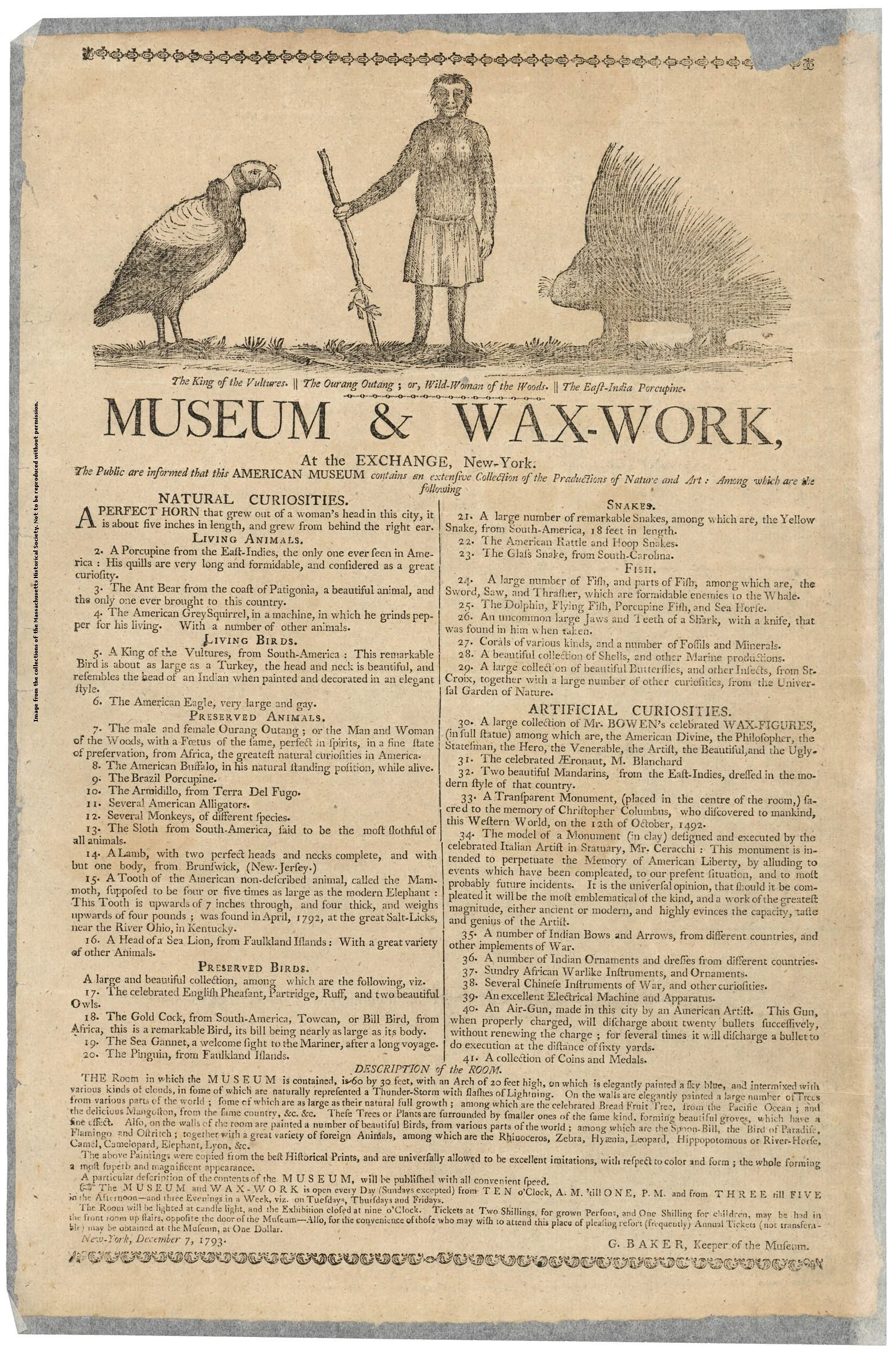
American Relics
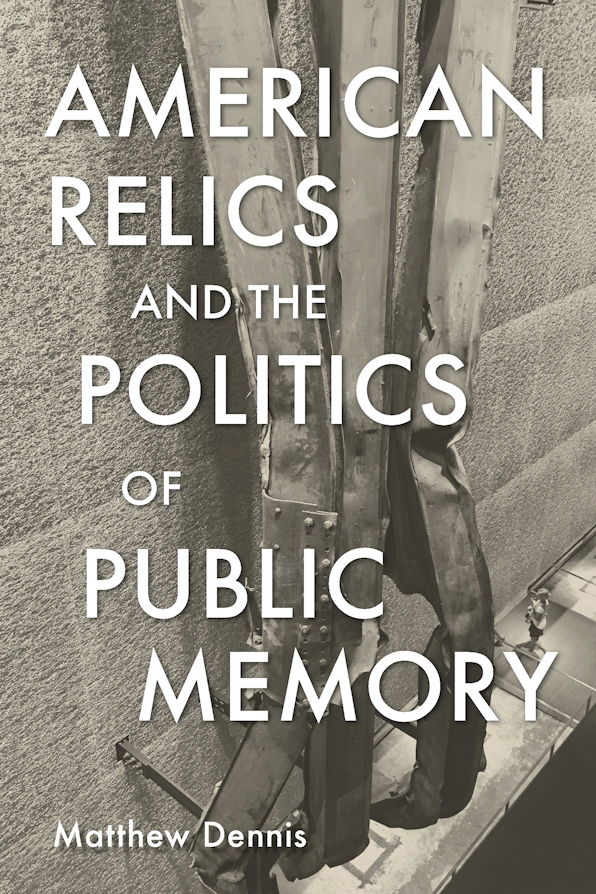
American Relics and the Politics of Public Memory
University of Massachusetts Press, 2023
-
The gold epaulettes that George Washington wore into battle. A Union soldier’s bloody shirt in the wake of the Civil War. A crushed wristwatch after the 9/11 attacks. The bullet-riddled door of the Pulse nightclub. Volatile and shape-shifting, relics have long played a role in memorializing the American past, acting as physical reminders of hard-won battles, mass tragedies, and political triumphs.
Surveying the expanse of U.S. history, American Relics and the Politics of Public Memory shows how these objects have articulated glory, courage, and national greatness as well as horror, defeat, and oppression. While relics mostly signified heroism in the nation’s early years, increasingly, they have acquired a new purpose—commemorating victimhood. The atrocious artifacts of lynching and the looted remains of Native American graves were later transformed into shameful things, exposing ongoing racial violence and advancing calls for equality and civil rights. Matthew Dennis pursues this history of fraught public objects and assesses the emergence of new venues of memorialization, such as virtual and digital spaces. Through it all, relics continue to fundamentally ground and shape U.S. public memory in its uncertain present and future.
-
“Meticulously researched, Matthew Dennis’s work is eminently readable and useful for scholars and students alike. He builds on histories that are familiar to students of American history, but disrupts the narrative at important points, offering us a material sense of how those who came before us considered the same events. And, he never fails to remind us—through the objects we venerate in our civic spheres—that ours is not an idyllic and saintly past. Through showing both the good and the bad, the beautiful and the ugly, Dennis gives us a more balanced vision of US material history than is often available, and pushes us to always consider the context in which an object was made and politically sanctified. Relics connect us ‘in the present both to the past and to the future,’ which is the best reason for considering those objects and building upon the foundation that Matthew Dennis has set in this work.”―Anastasia Pratt, H-Net
“In prose that is scholarly, compelling, and an absolute joy to read, Dennis clearly demonstrates how relics function as a special kind of object in American culture. American Relics and the Politics of Public Memory stands to be one of the most important histories of material culture and commemoration in decades.”―Sarah J. Purcell, author of Sealed with Blood: War, Sacrifice, and Memory in Revolutionary America
“Dennis deftly draws upon an impressive range of scholarship from museum studies, historic preservation, and public history to explore the many ways that Americans have invested memory and meaning in relics, collected and cherished or abhorred them, and used them to promote desired outcomes from consensus to violence.”―Alea Henle, author of Rescued from Oblivion: Historical Cultures in the Early United States
“American Relics and the Politics of Public Memory is a well-written survey offered not “with a sense of omniscience or superiority but in a spirit of inquiry, fascination, respect, occasionally pensive concern, and sometimes delight at human whimsy and weirdness. . . . In the field of history of memory in America, burgeoning for decades, Dennis’s American Relics and the Politics of Public Memory stands out as one of the most helpful, knowing overviews since Michael Kammen’s Mystic Chords of Memory (1991). It will prove useful as a text in graduate and undergraduate courses on U.S. history and culture studies, as well as museum studies. More than a few enterprising students interested in historicizing memory and its performances may be motivated by Dennis’s suggestive treatment to go further into areas that his survey, as such, cannot extensively consider. . . . American Relics and the Politics of Public Memory is a superb survey and a pleasure to read. It stands well on its own evidential and analytical bottom, and will inspire important adjacent work by others.”—Keith Beutler, Journal of American History
“In the book’s beefy middle section, titled “Supremacy,” . . . readers will find the freshest material. . . . By mining the diaries of overland travelers bound for California and Oregon, Dennis shows how white Americans strategically buried dead bodies wherever they might exert greatest mnemonic advantage in the conquest of western territory and the dispossession of Native people. . . . American relics conveyed white power in the nineteenth-century West just as saints’ relics conveyed church power across medieval Europe. . . . Dennis goes deep on tracing the actual material referents for the “bloody shirt” tropes that figured so prominently in American political discourse, especially after the Civil War. [The] chapter . . . functions as a thematic fulcrum by setting up a broader discussion of what Dennis terms ‘atrocious relics, . . . including the mutilated remains of Native bodies taken as trophies and Black bodies torn apart and displayed by lynch mobs, [which] have functioned throughout American history to politicize terror. Even for those of us deeply familiar with these histories, revisiting them here in granular detail is difficult. Dennis’s point in doing so is to reveal a reliquary grammar of terror—a ‘matrix’ in his words—that persists today in, say, white supremacist pushback against critical commemoration of Emmett Till’s murder. . . . [M]ost important here is Dennis’s endorsement of a kind of big-tent history scholarship that takes seriously contributions from material culture, memory studies, public history, and beyond. Also critical is Dennis’s western gaze, which is an important corrective to a conversation that has not always, but often, lingered in the shadow of the old thirteen. . . .American Relics and the Politics of Public Memory is a fantastic nudge, a book that offers up its author’s ‘delight at human . . . weirdness’ as encouragement for historians to revisit the past by rethinking the relic.”―Seth C. Bruggeman, Journal of the Early Republic
“Deeply rooted in public history and museum studies, this sweeping survey examines a diverse array of American relics—Charles Willison Peale’s Mastodon bones, Marquis de Lafayette’s tour of the United States, pioneers’ gravesites, Benjamin Butler’s ‘Bloody Shirt’ rhetoric, lynching photographs, and twisted steel from 9/11—from the early 1800s to the post-9/11 era . . . . American Relics and the Politics of Public Memory provides a thought-provoking exploration of the evolving meaning of America’s fraught relics and their role in current cultural and political discourse.—Tracy L. Barnett, Western Historical Quarterly