Seneca Possessed
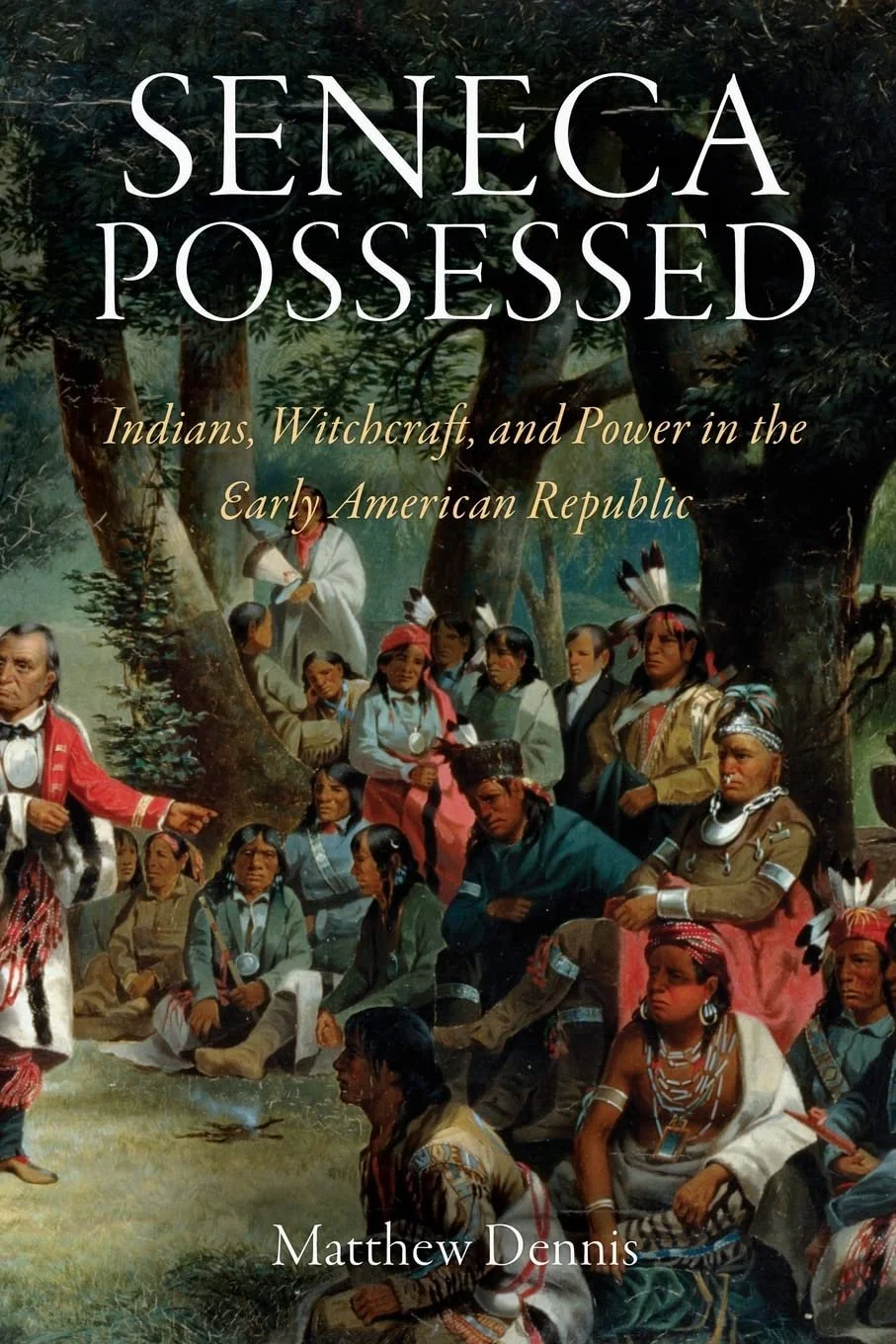
Seneca Possessed: Indians, Witchcraft, and Power in the Early American Republic
University of Pennsylvania Press, 2010
-
Seneca Possessed examines the ordeal of a Native people in the wake of the American Revolution. As part of the once-formidable Iroquois Six Nations in western New York, Senecas occupied a significant if ambivalent place within the newly established United States. They found themselves the object of missionaries' conversion efforts while also confronting land speculators, poachers, squatters, timber-cutters, and officials from state and federal governments.
In response, Seneca communities sought to preserve their territories and culture amid a maelstrom of economic, social, religious, and political change. They succeeded through a remarkable course of cultural innovation and conservation, skillful calculation and luck, and the guidance of both a Native prophet and unusual Quakers. Through the prophecies of Handsome Lake and the message of Quaker missionaries, this process advanced fitfully, incorporating elements of Christianity and white society and economy, along with older Seneca ideas and practices.
But cultural reinvention did not come easily. Episodes of Seneca witch-hunting reflected the wider crises the Senecas were experiencing. Ironically, as with so much of their experience in this period, such episodes also allowed for the preservation of Seneca sovereignty, as in the case of Tommy Jemmy, a Seneca chief tried by New York in 1821 for executing a Seneca "witch." Here Senecas improbably but successfully defended their right to self-government. Through the stories of Tommy Jemmy, Handsome Lake, and others, Seneca Possessed explores how the Seneca people and their homeland were "possessed"—culturally, spiritually, materially, and legally—in the era of early American independence. -
“In this lucid and fascinating book, Matthew Dennis ‘explores the ordeal of the Senecas in the early national period,’ offering a new gloss on a [familiar] story . . . . By placing Senecas within a larger context of both Iroquoian and early American history, and by asking new questions about how they—like other Indians and Anglo-Americans—adapted to the dizzying changes of the period, Dennis has crafted a compelling account of Seneca history in the years between the American Revolution and the 1830s. . . .Dennis provides an important new interpretation of how the Senecas adopted and what those adaptations tell us about both their history and the history of the early American republic. . . .Dennis offers new and often surprising details about the ways that Seneca expressions of spirituality—including a new approach to witchcraft—both anticipated and responded to the Second Great Awakening in New York’s ‘Burned-over District.’ . . . Dennis’s close attention to Quaker intentions and actions are among the book’s most important contributions. But it is Dennis’s argument about Seneca gender relations that will be most influential . . . .Like Handsome Lake’s religion, then, Dennis’s book is a distinctive blend of the familiar and the new, allowing us to see old questions in a different light and opening new paths for exploration.”—Brett Rushforth, Western Historical Quarterly
“Matthew Dennis aims to break out of what he sees as a binary narrative trap in the writing of Native American history in his compelling study of early republic–era Seneca life. Rejecting the all-too-familiar trope of declension as well as opposing tales of ‘uncomplicated Indian triumph,’ Dennis weaves seemingly disparate threads of Seneca social, cultural, political, and economic history into a unique and convincing interpretation of a crucial era of transition in Seneca peoples’ collective past. Based on deep research in archival sources housed primarily in Pennsylvania and New York, Dennis’s monograph represents an important contribution not only to the historiography of Iroquois people but also to that of the early American republic. . . . The greatest strength of the book resides in Dennis’s refusal to detach his analysis of the Senecas’ profound cultural metamorphosis circa 1799–1826 from the larger story of American national growth and transformation. Dennis draws frequent analogies between the experience of the Senecas and that of ‘other poor and middling Americans’ at that time, making certain connections evident that contemporary, literate historical actors misunderstood, ignored, or obscured. In so doing, Dennis provides a crucial ‘how-to’ lesson in integrating the often segmented histories of native peoples into broader contexts more familiar to a wider audience. . . . Dennis provides a nonlinear, yet richly detailed, tour of a little-studied period of Seneca history and culture. Among the highlights along this interpretive journey is a fresh analysis of the emergence of the Handsome Lake religion among the Senecas. Here Dennis ascribes relatively greater influence to the presence of Quaker missionaries among the Senecas than other historians have allowed and also suggests that the negative impact of the Gaiwi’io, or teachings of Handsome Lake, on Seneca women may not have been as severe as recent feminist readings have charged. . . . By the end of Dennis’s account, the reader is rewarded with a nuanced understanding of how the Senecas, notwithstanding frequent contemporary assertions of their status as a ‘backward’ population, represented such a frustrating obstacle for their would-be oppressors precisely because of their innovative success in engaging the new economic realities of the early American republic: market exchange, natural resource management, and land leasing as a means of economic development.”—Jon Parmeter, Cornell University
“Matthew Dennis uses this compelling opening scene [the murder trial of Seneca chief Tommy Jemmy] to launch into a comprehensive study of the Seneca from the end of the American Revolution through the 1820s. By focusing on the gendered implications of famed prophet Handsome Lake’s social and economic reforms and extending the narrative beyond the prophet’s death, Dennis sheds new light on the story of Seneca revitalization told by Anthony F. C. Wallace in his classic work The Death and Rebirth of the Seneca (New York, 1970). Furthermore, Dennis analyzes these internal transformations in conjunction with broader developments in American religious revivalism and the burgeoning capitalist marketplace. This thorough approach situates Seneca history within major topics in early national historiography without sacrificing a Seneca-centered narrative. . . . Casting the Seneca revitalization as ‘an indigenous expression of the Second Great Awakening,’ Dennis . . . places Handsome Lake’s movement in the context of the broader religious revivalism of the early nineteenth century. . . . Dennis’s analysis of the feminization of Seneca witch hunting and the patriarchal foundations of Seneca revitalization lends the work some of its most important insights. . . . Engaging a broad range of scholarly interests in early national revivalism, gender, Quakerism, Indian missions, and economic development, not to mention the Seneca themselves, Matthew Dennis shows that Seneca survival was as much a product of adaptation and persistence as it was a death and rebirth.”—Jonathan Todd Hancock, Journal of the Early Republic